
2026 Speakers
More speakers to be announced
Speakers
-
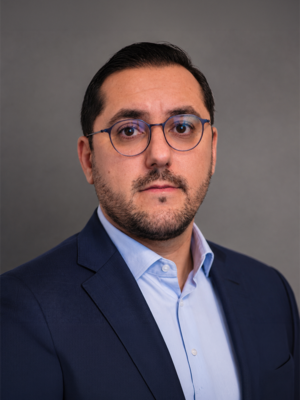
Giovanni Stracquadanio
ZYTHERA
Giovanni is a Professor of Engineering Biology, an EPSRC fellow, and Co-director of the Edinburgh Genome Foundry (EGF) at the University of Edinburgh and is co-founder and CEO of ZYTHERA
Giovanni Stracquadanio
ZYTHERA
Bio
Giovanni Stracquadanio is Professor of Engineering Biology at the University of Edinburgh and founder and CEO of Zythera, a preclinical company developing next-generation enzyme replacement therapies for rare lysosomal storage disorders, with Fabry disease as its lead indication. His work spans AI-driven protein design and quantitative experimental biology, aiming to deliver better therapies to patients with rare diseases.
-
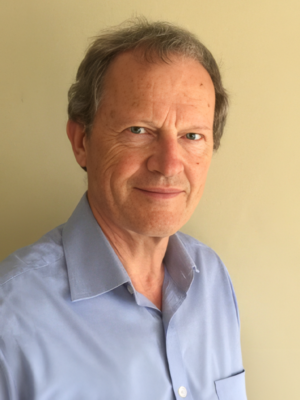
Lionel Clarke
BionerG Ltd
Director, BionerG Ltd and Former Co-Chairman, UK Engineering Biology Leadership Council
Lionel Clarke
BionerG Ltd
Bio
Following academic research in Imperial College, in Cambridge University and in Grenoble, France (as a Royal Society European Research Fellow), Lionel Clarke began his career developing environmentally-improved transport fuels with Shell, initially as global technical lead pioneering the global phase-out of leaded gasoline and, from 2000, the development of advanced biofuels as a means to reduce dependence upon fossil fuels. Motivated by the urgency to develop effective solutions to tackle climate change and the central role that biological systems could play, he left Shell in 2014 to start his own company, BionerG, developing a biobased system for global carbon removal. He was invited by the UK government in 2011 to chair the generation of the UK Synthetic Biology Roadmap, and subsequently to co-chair together with a senior government minister the UK’s Engineering Biology Leadership Council (EBLC), an independent advisory council, through to 2023.
Lionel Clarke is a visiting professor in the Department of Bioengineering in Imperial College and holds an honorary professorial chair in the Faculty of Chemistry in the University of Manchester. In 2019 he was awarded an OBE by HM Queen Elizabeth for services to Synthetic Biology.
-
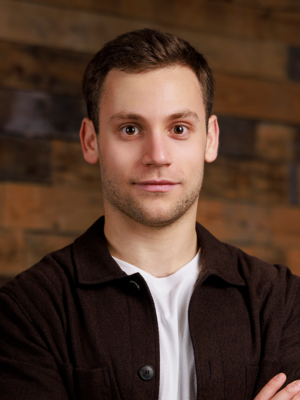
Jacob Nathan
Epoch Biodesign
Jacob is the Founder & CEO of Epoch Biodesign, a biotech company using AI-engineered enzymes to enable textile-to-textile recycling
Jacob Nathan
Epoch Biodesign
Bio
Jacob is the Founder & CEO of Epoch Biodesign, a biotech company using AI-engineered enzymes to enable textile-to-textile recycling, starting with nylon 6,6. Featured on Forbes’ 30 Under 30, Jacob has secured over $50 million in funding from top-tier investors such as Lowercarbon Capital, Lululemon, and Inditex. Epoch’s room temperature process enables blended materials to re-enter the textile supply chain, producing virgin-quality monomers. Epoch is now completing construction of its 150-tonne-per-year demo facility in the UK before commissioning >20,000 tonnes of capacity in Europe.
-
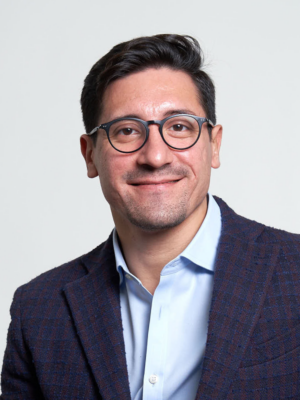
Giuseppe Mazza
Engitix Therapeutics
Giuseppe Mazza is a biomedical entrepreneur and scientist who co-founded Engitix in 2016 and has served as Chief Executive Officer since the Company’s inception.
Giuseppe Mazza
Engitix Therapeutics
Bio
Giuseppe Mazza is a biomedical entrepreneur and scientist who co-founded Engitix in 2016 and has served as Chief Executive Officer since the Company’s inception. Rooted in pioneering academic research conducted alongside co-founder Professor Massimo Pinzani at the Institute for Liver and Digestive Health (ILDH), Division of Medicine, University College London (UCL), Giuseppe has transformed fundamental discoveries in extracellular matrix biology into a world-leading proprietary human ECM drug discovery platform — one now reshaping how the pharmaceutical industry approaches fibrotic and soid tumors.
Under his leadership, Engitix has grown from an early-stage spinout into a commercially validated biotechnology company, having raised over $55M across multiple financing rounds and secured landmark partnerships worth over $60M in revenues and $800M in biodollars with global leaders including Dompe, Morphic, and Takeda. Giuseppe also established Engitix’s cutting-edge laboratories and offices at WestWorks, White City, London — a purpose-built hub designed to accelerate the next generation of ECM-based therapeutics.
Prior to founding Engitix, Giuseppe was a Post-Doctoral Fellow at UCL ILDH, where he led the Tissue Engineering and Regenerative Medicine Laboratory. He holds a PhD in Tissue Engineering and Organ Regeneration from UCL and retains an active affiliation with the university as Honorary Associate Professor. He also held a Director of R&D role at Promethera Biosciences (2015–2017).
Beyond his commercial and scientific work, Giuseppe has demonstrated a sustained commitment to patient communities and global health. He has served on the Steering Committee of the European Haemophilia Consortium (EHC), and in 2011 founded Associazione Icore ONLUS, a healthcare charity he led as President for six years.
-
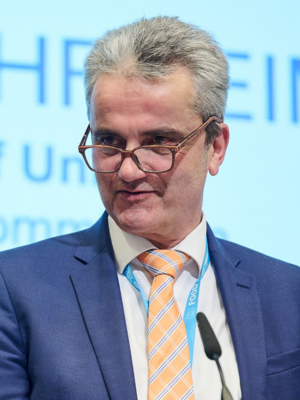
Peter Wehrheim
European Commission
Peter Wehrheim is Head of Unit for “Bioeconomy and Food System” within the Directorate General for Research and Innovation of the European Commission in Brussels.
Peter Wehrheim
European Commission
Bio
Peter Wehrheim is Head of Unit for “Bioeconomy and Food System” within the Directorate General for Research and Innovation of the European Commission in Brussels.
Prior to this assignment, he worked for the European Commissioner for Agriculture and Rural Development, Phil Hogan. He is a member of the International Advisory Council to the Global Bioeconomy (IACGB). From 2010 to 2018 he was Head of Unit for Land Use and Climate Finance in Directorate-General for Climate Action.
Before 2004, Peter worked at the Universities of Bonn/DE, Maryland/US (with a Heisenberg scholarship of the German Research Foundation) and Kiel/DE. Between 1994 and 2004 he worked as a part-time consultant for the World Bank, Food and Agricultural Organization (FAO), the International Food Policy Research Institute (IFPRI / Washington), the German Bank for Reconstruction (KfW) and other development agencies. He received his doctoral degree (and his habilitation) in agricultural economics from the University of Giessen (University of Bonn, Germany) and comes from a vinery in southern Germany.
-
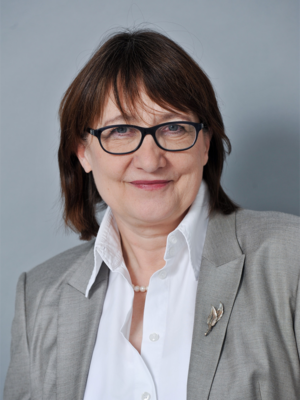
Christine Lang
Biobased Future Foundation
She is co-chair of the think tank International Global Advisary Council on Global Bioeconomy and she heads the Biobased Future Foundation.
Christine Lang
Biobased Future Foundation
Bio
Christine Lang studied biology in Bochum and Brighton. She gained her doctorate in Bochum in 1985. After working as a scientist and group leader in the chemical industry, she moved to the TU Berlin in 1993, where she completed her habilitation in microbiology and molecular genetics. She is an adjunct professor of microbiology and molecular genetics. In 2001, she founded Organobalance GmbH as a company for new microbial agents and strains. In 2016 Organobalance became part of Novozymes A/S. She has been Co-Chair of the German Federal Government’s Bioeconomy Council from 2012 to 2019. She is co-chair of the think tank International Global Advisary Council on Global Bioeconomy. She heads the Biobased Future Foundation.
-
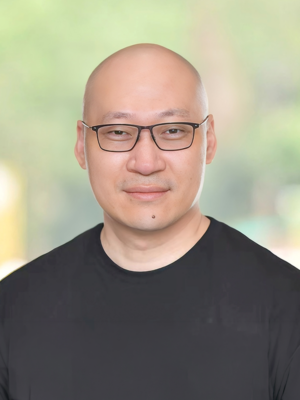
Chenli Liu
Shenzhen Institutes of Advanced Technology (SIAT)
Chenli Liu is a Pengcheng Distinguished Professor and President of Shenzhen Institutes of Advanced Technology (SIAT)
Chenli Liu
Shenzhen Institutes of Advanced Technology (SIAT)
Bio
Chenli Liu is a Pengcheng Distinguished Professor and President of Shenzhen Institutes of Advanced Technology (SIAT), Chinese Academy of Sciences, the Founding Directors of China State Key Laboratory for Quantitative Synthetic Biology, China National Industrial Innovation Center for Biomanufacturing (NIICB), and Shenzhen Institute of Synthetic Biology (iSynBio), the Chief Scientist of Shenzhen Infrastructure for Synthetic Biology, the Chief scientist of Chinese Academy of Sciences Synthetic Cell Initiative, and National Natural Science Foundation of China Basic Science Center on Synthetic Cell. Liu obtained his Ph.D. in Biochemistry from the University of Hong Kong, and postdoctoral training at MCB, Harvard University. He started his lab at SIAT in 2014. Liu lab is focused on bringing together concepts and approaches from synthetic biology together with quantitative biology. Current research interest includes synthesizing a cellular life from bottom up and engineering bacteria for solid tumor therapy. He is the recipients of several prestigious awards, e.g. “Ho Leung Ho Lee Foundation Science and Technology Award”, “Agilent Thought Leader Award”, “C.C. Tan Life Science Innovation Award”.
-
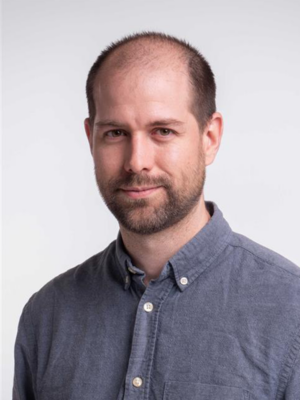
Rodrigo Ledesma-Amaro
Bezos Centre for Sustainable Protein and the Microbial Food Hub
Rodrigo Ledesma-Amaro is a Professor at Imperial College London and Director of the Bezos Centre for Sustainable Protein and the Microbial Food Hub.
Rodrigo Ledesma-Amaro
Bezos Centre for Sustainable Protein and the Microbial Food Hub
Bio
Rodrigo Ledesma-Amaro is a Professor at Imperial College London and Director of the Bezos Centre for Sustainable Protein and the Microbial Food Hub. He leads a research group at the forefront of Engineering Biology and sustainability.
His work focuses on harnessing microorganisms to convert renewable feedstocks into high-value products, with a particular emphasis on sustainable food ingredients. His research spans microbial bioproduction, including precision, biomass and traditional fermentation, and has resulted in over 200 publications.
-
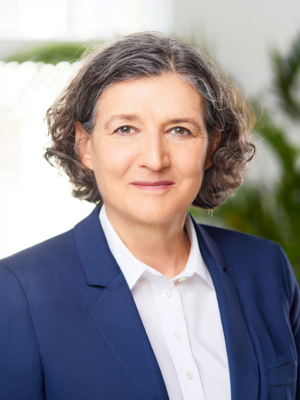
Viola Bronsema
German Biotechnology Industry Association
Viola Bronsema has been managing director of the German Biotechnology Industry Association (BIO Deutschland e. V.) in Berlin since October 2006.
Viola Bronsema
German Biotechnology Industry Association
Bio
Viola Bronsema has been managing director of the German Biotechnology Industry Association (BIO Deutschland e. V.) in Berlin since October 2006. She has been a member of the jury for the Research Campus Program since 2021. From 2020 to 2023, she was also a member of the German Federal Government’s Bioeconomy Council, and from 2021 to 2025, she was a member of the Federal Ministry of Education and Research’s Council for Technological Sovereignty.
Previously, she headed communications at Roche Diagnostics GmbH and Roche Diagnostics Europe, Middle East, Africa from 2002 to 2006, and was press spokesperson for Lilly Pharma Holding GmbH from 2000 to 2002. From 1998 to 2000, she worked as a press spokesperson and editor in the press and public relations department of the German Cancer Research Center (DKFZ) in Heidelberg. From 1995 to 1998, she was a public relations consultant at CGC Cramer-Gesundheits-Consulting, Frankfurt, most recently as a senior consultant. She began her professional career in 1989 as a research assistant at the Center for Molecular Biology in Heidelberg.
Viola Bronsema studied biology at the Universities of Mainz and Heidelberg and completed her dissertation at the Center for Molecular Biology in Heidelberg. She also trained as a certified public relations consultant at Initiative Communication e. V. in Heidelberg.